
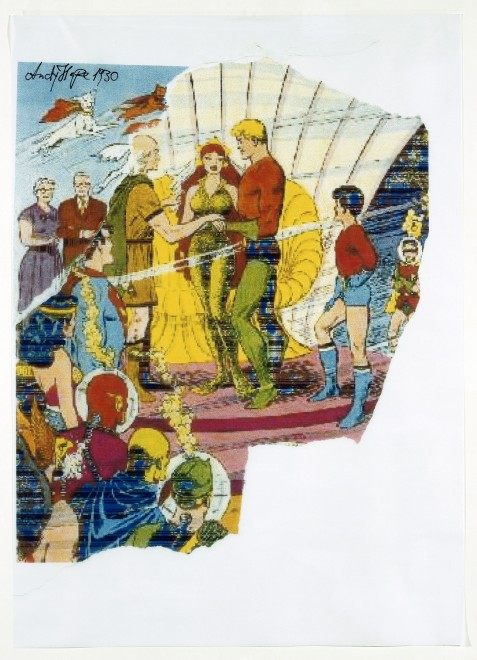
In 1940 Joseph Goebbels, the Nazi Propaganda minister in Germany, went to the trouble of denouncing Superman as a Jew and had his comics banned from the newsstands. According to the artist, Andy Hope 1930, Superman's introduction to Europe in 1938 was a watershed moment in European cultural history. The 1930s did not just witness Superman's heroics for the first time, but—and this is what fascinates the artist—it was the moment when Western cultural authority transferred from Europe to America.
In around 2010 Andreas Hofer changed his artist name to Andy Hope 1930, a Western corruption of his German name, a name of a "fictional persona in which I travel to different times and spaces." It has been written before that in Hope's work incompatible cultures collide, where German Kippenbergeresque figurative painting is contorted with 20th century American pop culture. A collision through science-fiction iconography that is perpetually tinged with a "back to the future" nostalgia.
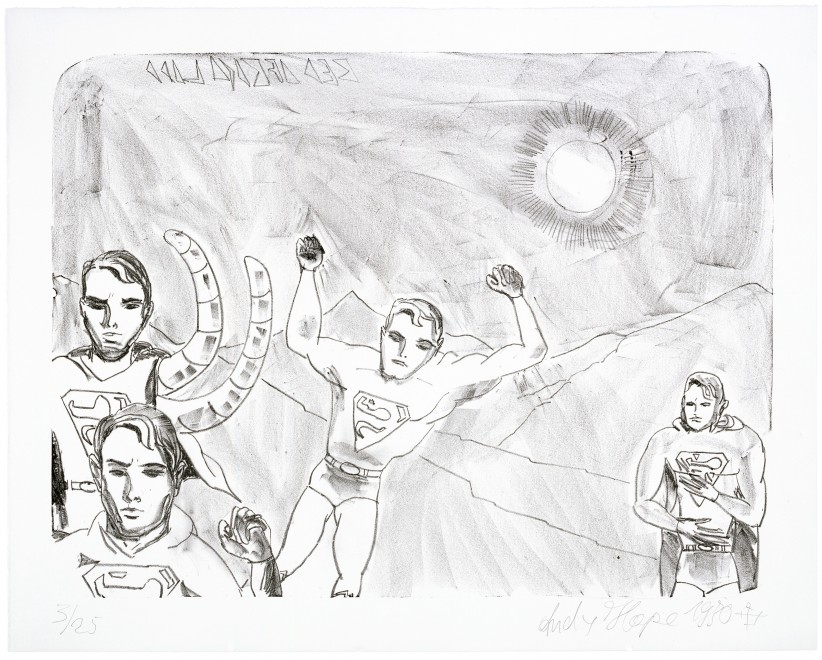
Superman recurs throughout Hope's work, in Red Africa Ladd, the face of the Superhero is reproduced, the heroic features made mundane, a soured irony that even sees Superman sprouting the sort of tentacles we usually associate with his enemies. In the middle Superman is without his cape, his hands raised in a half-hearted pose of surrender. Under the beating hot sun of Africa, without Metropolis and towering skyscrapers of symbolic New York, Superman is diminished. A comment perhaps, on the optimism of American ideals crashing in the stark terrain of Africa’s central plains—its most potent cultural export reproduced and reduced.
"My superhero-related work is not about superpower. If you look at my superheroes, you will discover mostly figures that are deranged or broken, some of them even seem to fall apart or they blend with other characters." Andy Hope 1930
Hope is fascinated by the cultural significance of superheroes and the complexity of their characters. Superman’s omnipotence is offset by the meekness of his Clark Kent character and many scholars have drawn attention to the core of Superman's persona as being that of a migrant. Placed on a rocket ship by his parents and flown to earth on the eve of the planet Kryptonite's destruction.
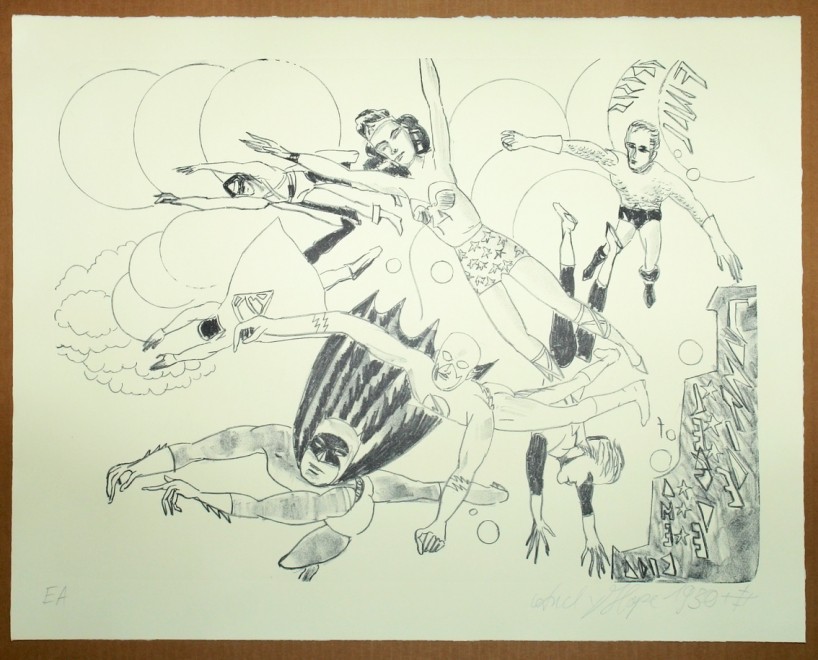
In JLA, 2009, we are confronted with a sight of superheroes from the Justice League, including Wonderwoman, Superman, and Batman & Robin all moving in a multiple directions. Drawing from the charged action scenes in comic books, the differing directions of the superheroes comes across as ineffectual, pointless and hilarious —we have come to expect more from our superheroes.
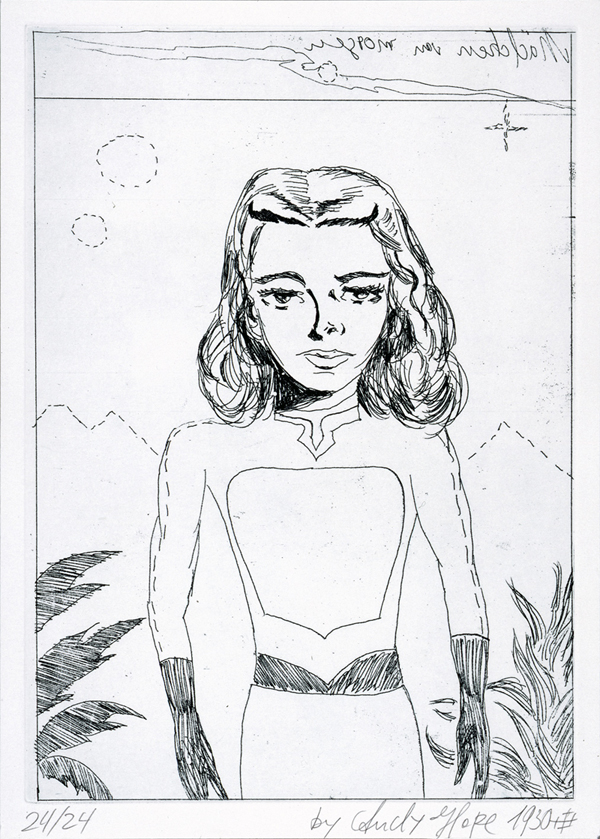
Is this really our ideal of a girl from the future? Under a double sun and a stark background, Wonderwoman, Mädchen von Morgen (Girl from Tomorrow), has the sultry face of Katherine Hepburn and the broad shoulders of a man. Her bust is left blank, her arms toned with ostentatious muscles—an unsettling hybrid of an Amazonian superhero and a Hollywood icon.
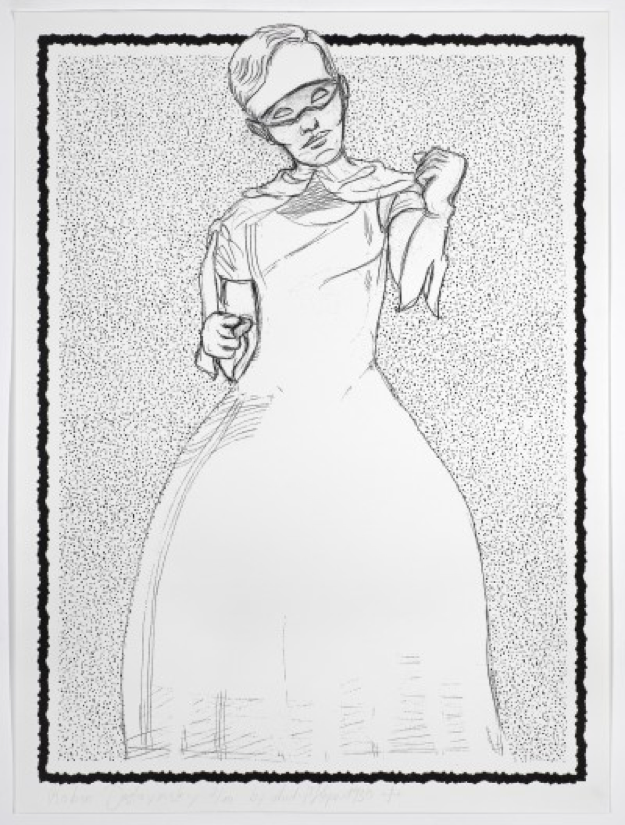
In his series of works entitled Robin Dostoyevsky, Andy Hope 1930 created a "queer character wearing a cape and an ancient dress". Robin, the helpful young and pugnacious sidekick of Batman, is often referred to as his Batman's "secret gay friend". By mischievously combining him with Fyodor Dostoyevsky, whose works represent to Hope the dangerous stream of "dramatic feeling", Andy Hope 1930 is producing action of a very different kind. Where Robin to ever express his "true" feelings to Batman, the macho cultural icon would surely be undermined and fall apart.


